
How to Pack Light for Any Trip and Travel Smart
Packing light is one of the most effective ways to reduce stress, save time, and move freely while traveling. Whether you’re heading out for a weekend getaway or a month-long adventure, knowing how to pack light for any trip and travel smart means carrying only what you truly need—without sacrificing comfort or preparedness. This guide walks you through proven strategies, smart gear choices, and packing techniques that help you travel efficiently, avoid checked baggage fees, and navigate airports, trains, and city streets with ease.
Why Packing Light Makes Travel Easier
Carrying less isn’t just about convenience—it’s a mindset shift that changes how you experience travel. When you pack light, you spend less time waiting at baggage claim, reduce the risk of lost luggage, and avoid overweight baggage fees. You’ll also find it easier to switch between transportation modes, whether you’re hopping on a regional flight, catching a bus, or walking through cobblestone streets with your bag in tow.
Beyond logistics, packing light encourages intentionality. It forces you to evaluate each item: Will I really use this? Is there a lighter alternative? This clarity leads to smarter decisions and a more streamlined travel experience.
How to Pack Light for Any Trip: A Step-by-Step Approach
Effective packing starts long before you zip up your suitcase. Follow these steps to build a lean, functional travel wardrobe and gear setup.
1. Define Your Trip Parameters
Start by understanding the specifics of your journey. Consider:
- Destination climate: Check the weather forecast and seasonal patterns. A tropical beach trip demands different clothing than a mountain trek.
- Trip duration: A 3-day city break requires far less than a 10-day European tour.
- Activities planned: Will you attend formal dinners, hike trails, or visit religious sites with dress codes?
- Accommodation type: Hotels with laundry services allow for fewer clothes; hostels may require packing a travel towel and flip-flops.
- Transportation: Budget airlines often have strict carry-on size and weight limits.
2. Choose the Right Bag
Your luggage choice sets the tone for how much you can bring. For most travelers, a well-designed carry-on suitcase or backpack is ideal.
Carry-on suitcases (typically 20–22 inches) offer structure, wheels, and compartments—great for business trips or city travel. Look for lightweight polycarbonate models under 7 pounds.
Travel backpacks (35–45 liters) are better for active trips, hostels, or destinations with uneven terrain. A 40L pack can comfortably hold a week’s worth of clothing when packed efficiently.
Personal item: Always bring a small daypack or tote for essentials like your passport, charger, snacks, and a change of clothes in case your main bag is delayed.
3. Master the Art of Capsule Packing
A capsule wardrobe consists of versatile, mix-and-match pieces that work together across outfits. This method reduces clothing volume while increasing outfit options.
For a 7-day trip, aim for:
- 4–5 tops (e.g., 2 t-shirts, 1 long-sleeve, 1 button-down)
- 2–3 bottoms (e.g., 1 pair of pants, 1 pair of shorts or a skirt)
- 1–2 dresses or jumpsuits (if applicable)
- 1 lightweight jacket or cardigan
- 7 pairs of underwear
- 3–4 pairs of socks
- 1 pair of walking shoes, 1 pair of casual shoes (or sandals)
- Sleepwear and a swimsuit (if needed)
Stick to a cohesive color palette—navy, gray, black, white, and olive green work well together. Avoid loud patterns or items that only match one other piece.
4. Use Packing Techniques That Save Space
How you pack matters as much as what you pack. These methods maximize space and minimize wrinkles:
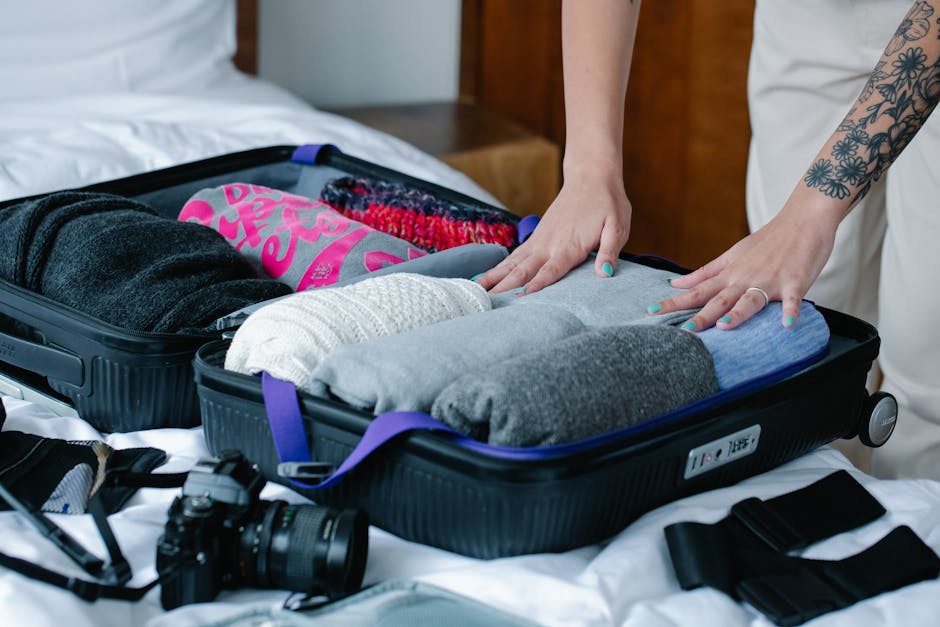
Rolling vs. Folding: Rolling clothes takes up less space and reduces creasing, especially for t-shirts, jeans, and casual wear. Fold structured items like dress shirts or blazers.
Bundle Wrapping: Wrap outfits around a central core (like a small towel or packing cube) to keep items compact and organized.
Packing Cubes: These fabric organizers compress clothing and separate categories (tops, bottoms, underwear). They make unpacking faster and help you see what you have at a glance.
Compression Bags: Ideal for bulky items like puffer jackets or sweaters. Vacuum-sealed versions save the most space but can wrinkle clothes—use standard compression bags for better fabric care.
5. Minimize Toiletries and Personal Care Items
Toiletries are often overpacked. Most hotels provide basics like shampoo and soap, and you can buy most items at your destination if needed.
Stick to travel-sized containers (under 3.4 oz for liquids) and prioritize multi-use products:
- Solid shampoo bars (no liquid restrictions)
- Toothpaste tablets instead of tubes
- All-in-one moisturizer with SPF
- Lip balm with tint and sun protection
- Mini first-aid kit with band-aids, pain relievers, and any personal medications
Use a hanging toiletry bag to save counter space and keep items accessible.
6. Limit Electronics and Chargers
It’s easy to overpack tech. Bring only what you’ll actually use:
- Smartphone (with offline maps and translation apps)
- One universal travel adapter (check plug types for your destination)
- Portable power bank (10,000mAh is usually sufficient)
- Laptop or tablet only if necessary for work or entertainment
- E-reader instead of multiple books
Avoid bringing extra cables—use multi-port chargers and USB-C hubs to reduce clutter.
7. Wear Your Bulkiest Items
Maximize suitcase space by wearing your heaviest or bulkiest items on travel days:
- Boots or sneakers
- Jacket or coat
- Jeans or thick pants
- Backpack or daypack
This strategy frees up significant space and reduces weight in your bag.
Smart Gear Choices for Lightweight Travel
The right gear can make a big difference in how efficiently you travel. Invest in lightweight, durable, and multi-functional items.
| Item | Standard Option | Lightweight Alternative | Weight Saved |
|---|---|---|---|
| Rain Jacket | Heavy polyester shell | Packable nylon windbreaker | 8–10 oz |
| Travel Towel | Cotton beach towel | Microfiber quick-dry towel | 12–16 oz |
| Sleepwear | Flannel pajamas | Lightweight cotton or bamboo set | 6–8 oz |
| Footwear | Two pairs of leather shoes | One pair of versatile trail runners | 1.5–2 lbs |
Common Mistakes to Avoid When Packing Light
Even experienced travelers make packing errors. Watch out for these pitfalls:
- “Just in case” items: If you haven’t used it in the last six months, you probably won’t need it on your trip.
- Overpacking shoes: Shoes take up space and weigh a lot. Stick to two pairs max—one for walking, one for dressier occasions.
- Forgetting to weigh your bag: Use a luggage scale before leaving home. Many carry-ons exceed airline limits even when they look small.
- Ignoring laundry options: Plan to do laundry once or twice during longer trips. Pack a small sink stopper and travel detergent sheets.
- Packing full-size toiletries: Transfer liquids into 3.4 oz containers. Solid alternatives eliminate liquid restrictions entirely.
How to Pack Light for Different Types of Trips
While the core principles remain the same, packing strategies should adapt to your travel style.
Weekend City Break
Pack for 2–3 days with room to bring back souvenirs. Focus on comfort and style:
- 1 pair of versatile shoes
- 2–3 outfits that mix and match
- Light jacket
- Small crossbody bag for daily use
Beach or Tropical Vacation
Prioritize sun protection and quick-dry fabrics:
- Swimsuit (wear one, pack one)
- UV-protective rash guard or cover-up
- Sandals and water shoes
- Wide-brimmed hat and sunglasses
- Biodegradable sunscreen and reef-safe bug repellent
Adventure or Hiking Trip
Durability and weather resistance are key:
- Moisture-wicking base layers
- Waterproof shell jacket
- Hiking boots (worn en route)
- Trekking poles (if needed)
- Headlamp and water purification tablets
Business Trip
Balance professionalism with practicality:
- 1–2 wrinkle-resistant dress shirts
- 1 suit or blazer (roll to prevent creasing)
- Non-wrinkle dress pants
- Portable steamer or wrinkle-release spray
- Noise-canceling headphones for flights
Final Tips for Traveling Smart
Packing light is just one part of smart travel. Combine it with these habits for a smoother journey:
- Check baggage policies: Airlines vary widely in size and weight limits. Know your carrier’s rules before you pack.
- Use digital copies: Store boarding passes, hotel confirmations, and travel insurance details in your phone.
- Pack a reusable water bottle: Fill it after security to stay hydrated and reduce plastic waste.
- Leave room for souvenirs: Pack a foldable tote or use your personal item for purchases on the return trip.
- Test your setup: Do a trial pack a few days before departure to identify overages or missing essentials.
FAQ: How to Pack Light for Any Trip and Travel Smart
How many outfits should I pack for a 10-day trip?
You don’t need 10 outfits. With a capsule wardrobe of 4–5 tops and 2–3 bottoms, you can create 8–10 different combinations. Plan to do laundry once or use sink-washing for underwear and socks.
Can I really travel with just a carry-on for two weeks?
Yes—many travelers do it regularly. It requires careful planning, lightweight clothing, and access to laundry. Choose quick-dry fabrics and pack only what you’ll realistically wear.
What’s the best way to prevent wrinkles when packing light?
Roll soft fabrics, fold structured items, and use packing cubes to minimize shifting. Pack dressier items last and on top. For important meetings, bring a portable steamer or use the hotel bathroom’s steam from a hot shower.
Conclusion
Learning how to pack light for any trip and travel smart isn’t about deprivation—it’s about freedom. When you carry less, you move faster, stress less, and stay more present in your travels. By choosing versatile clothing, using space-saving techniques, and focusing on essentials, you’ll spend less time managing luggage and more time enjoying your journey. Start small, refine your system with each trip, and soon packing light will feel natural—and rewarding.

